







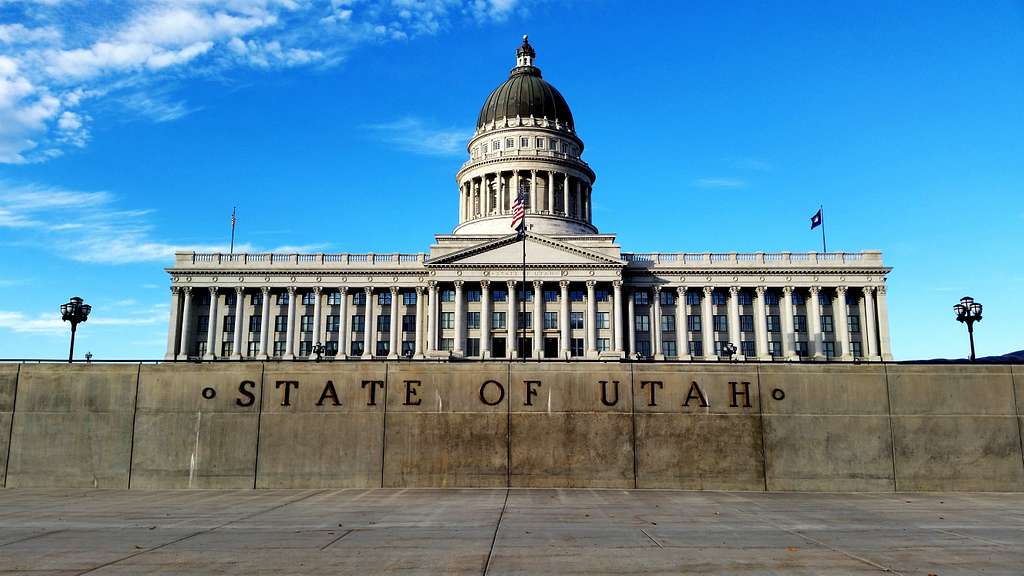




























As AI becomes increasingly added in everyday life, the line between what is real and AI is starting to change. Utah’s HB286 Artificial Intelligence Transparency Amendments aims to address this concern by requiring that companies are honest when using artificial intelligence. While some may argue that this regulation potentially stops innovation, I believe that transparency is no longer an option and needs to become necessary for daily life.
For many teenagers, artificial intelligence is a daily tool. Students rely on AI for everything, such as advice, homework help, social media algorithms to create content, and so much more. There is even an increase in AI chatbots as they start to copy the idea of human realism. According to the Pew Research center, over 50% of Americans already interact with AI in their daily lives, willingly.
However, what is more concerning is the idea that experts believe that 79% of people frequently engage with AI without even realizing it. This lack of awareness creates the problem.
This problem is already shown through AI deepfakes. The rise of deepfake technology shows how easily AI can be used to change and manipulate the truth. The number of deepfakes has increased from approximately 500,00 in 2023 to an estimated 8 million in 2025. That is an increase of more than 900%. Despite this, humans are remarkably poor at understanding when something is a deepfake, with accuracy rates as low as 24.5% for high-quality videos. This number will only get lower as AI technology improves. In today’s world, where misinformation can spread quickly, this inability to understand facts from made up ideas creates problems.
Consider this viral TikTok account dedicated to realistic videos of Tom Cruise, which has over 3.4 million followers.
While it is entertaining, such content shows a deeper issue. If the audiences can not reliably tell whether what they are seeing is real, trust in the media begins to fall apart. There are more cases online where there have been deepfakes of other celebrities, often being negative, such as framing a celebrity to do something they did not do. What starts as harmless entertainment can quickly change into fraud and reputational harm.
The issue is ethical. It is unfair for people to unknowingly be influenced or misled by artificial intelligence. Transparency is not about restricting technology, but it is about making sure that people have the information necessary to make informed decisions. By adding transparency, HB286 shows values of honesty, accountability, and public trust.
Critics of the bill also argue that requiring companies to disclose AI could create more trouble for businesses, with the potential to slow innovation or place smaller companies at a disadvantage. Others worry that overly broad regulations could be hard to enforce, especially as AI evolves rapidly. There is also the idea that the constant idea of a warning could lead to people ignoring the warnings and not understanding the importance.
However, I see that the risks do not outweigh all the possible benefits.
Adding these new warnings could provide a framework that helps regulate innovation so that it may be responsible, without stopping innovation. Clear, reasonable, transparent requirements can protect consumers. In fact, establishing trust through transparency may ultimately encourage wider adoption of AI by making users feel more secure.
As AI continues to advance, society must decide not only how to use it, but also how to regulate it responsibly. Transparency is the foundation of that responsibility.
In a world where reality can be manufactured, the right to know what is real may be more important than ever. Rep. Doug Fiefia’s HB286 represents a step towards addressing this issue before it becomes unmanageable.
April 1 update: According to the Salt Lake Tribune, this bill never got a vote because the White House Office of Intergovernmental Affairs objected: “We are categorically opposed to Utah HB286 and view it as an unfixable bill that goes against the Administration’s AI Agenda,” the letter reportedly read. They argued that the bill would stifle innovation.