
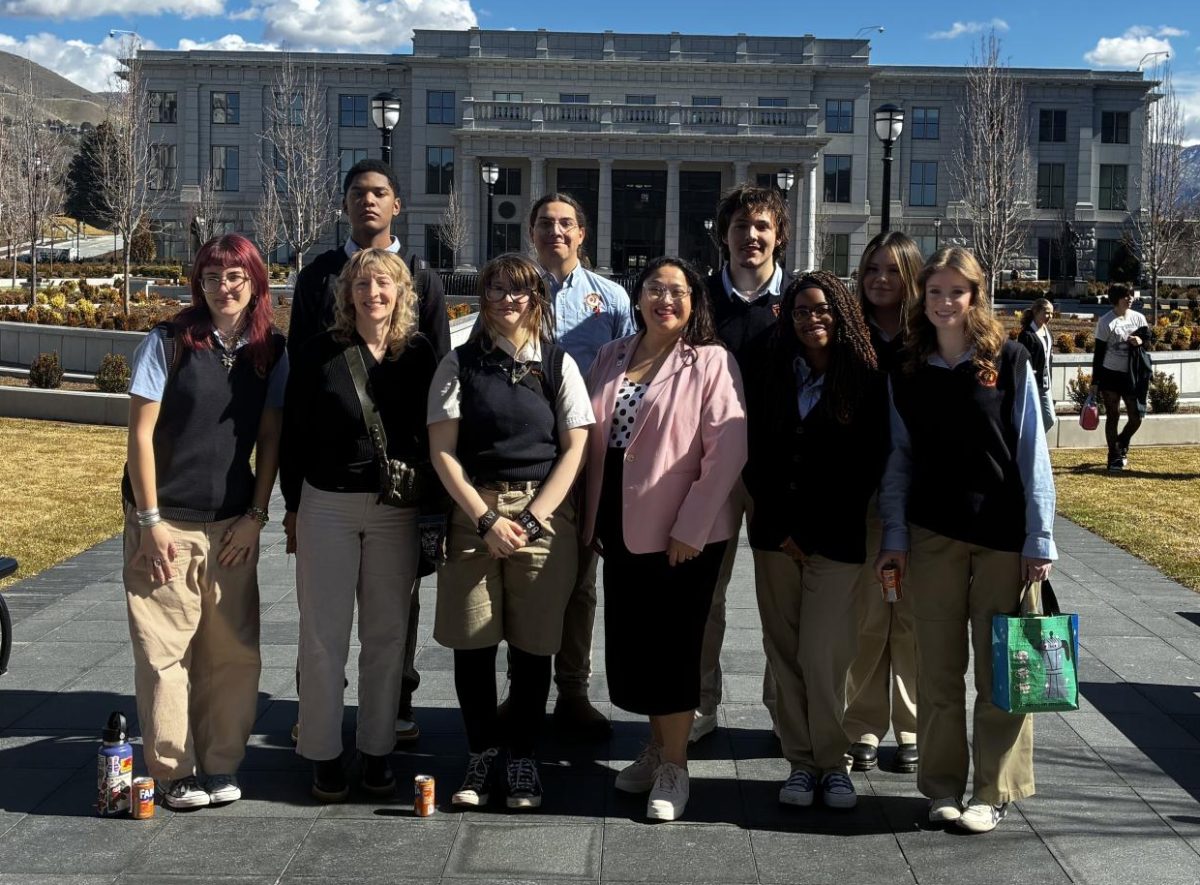
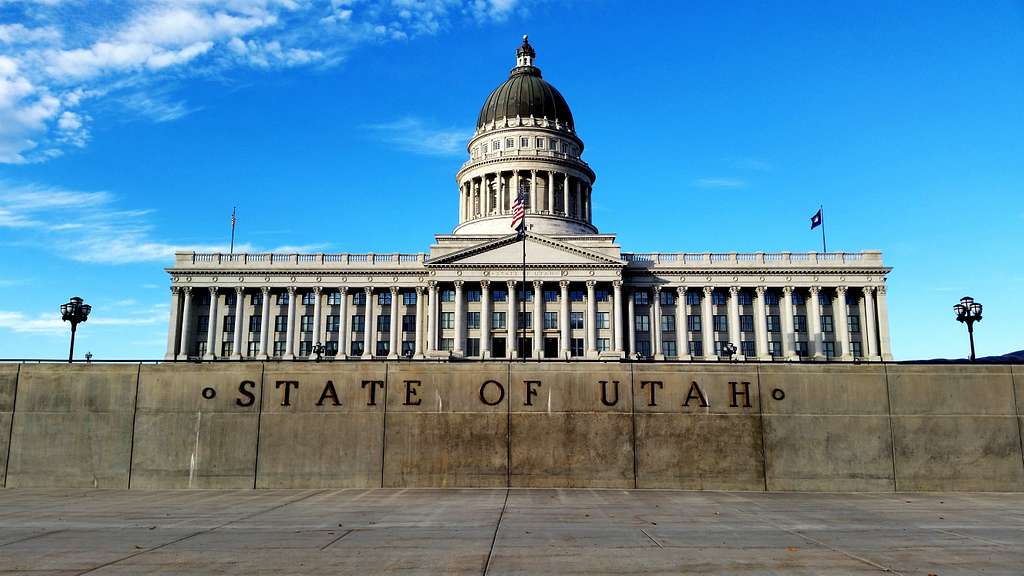









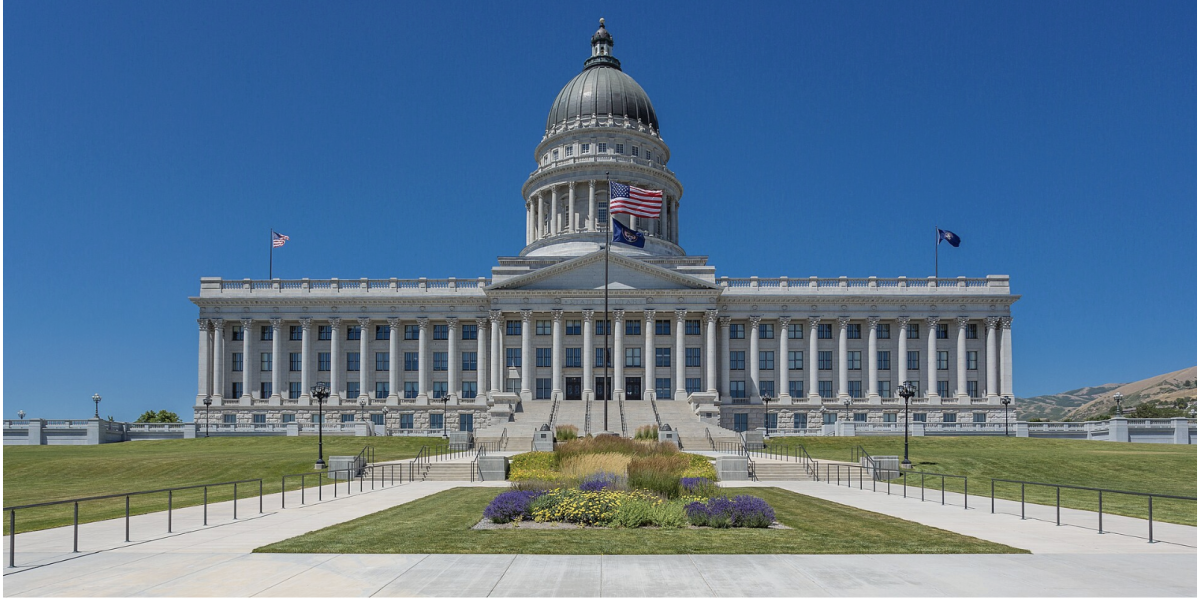



The Utah legislature ran from January 20 to March 6, and during that time, 542 bills were passed by the Utah House and Senate. A bill being passed means it was voted “yea” by a majority in both the Utah House of Representatives (a minimum of 38 votes) and the Utah Senate (a minimum of 15 votes). That bill is then sent to Governor Cox, who signs it into law and puts the bill into effect.
Of the 542 bills passed by the Utah legislature, those covered by the Bulldog Press and having the strongest influence on high school students are presented in this article.
HB1: Public Education Base Budget Amendments, Rep. Whyte
This bill seeks to further fund Utah public schools and provide $4,870 per enrolled student. This bill seems, through the lens of supporters, to uplift the public school system and provide more funding and support for teachers’ salaries, but is deemed to have only a temporary effect as inflation keeps rising, and is only set against the current economic situation.
HB44: School Security Personnel Standards, Rep. Wilcox
In an effort to improve school security, this bill promotes the use of school individual protection agencies, which may be private companies rather than civil law enforcement. These security officials would be able to carry firearms. This bill also requires school safety officials to carry a “panic button” for use in emergencies. Opposition to this bill is centered around concerns about more weapons in schools and the worry that this would promote violence or uncertainty in school environments.
HB48: Criminal and Juvenile Justice Changes, Rep. Lisonbee
This bill looks to house juvenile criminal offenders of violent or harsh crimes to be held in adult prisons if requested by the prosecutor. It also makes amendments to the processing and tracking of repeat youth offenders. A supporting outlook on this bill would be that it empowers youth to make better decisions so they are not held in higher-security facilities, and that adult prisons provide greater safety for the public and the offender. The opposition suggests that this bill would put already struggling minors with adults and in more serious punishment.
HB103: Underage Marriage Amendments, Rep. Ballard
This bill makes it illegal for an adult to marry a minor (under 18) in the state of Utah, as well as making it illegal for an adult and a minor to travel to another state to get married, as the adult can be prosecuted when they return. Supporters of this bill recognize 18 as the “age of consent” and state that it would help protect youth from predators.
HB123: Sex, Kidnap, and Child Abuse Offender Registration Amendments, Rep. Acton
This bill requires offenders of the above crimes to register with Utah’s Sex Offender Registry, regardless of whether they have already served time or other confounding factors. Supporters for this bill aims to empower Utah communities to feel safer, while opponents view it as an obstacle to people trying to move forward and rebuild their lives.
HB204: Higher Education Student Belief Accommodation, Rep. Peterson
This bill accommodates students who object to assignments that conflict with their moral or religious beliefs at Utah colleges or universities As many high schoolers look to college, a major selling point of Utah colleges for supporters of this bill would be the freedom to exercise their freedom of religion and beliefs in a classroom setting. Critics argue that it could weaken academic standards and limit students’ exposure to challenging ideas.
HB273: Classroom Technology Amendments, Rep. Defay
The use of AI and technology is becoming more prevalent, especially in classroom settings. This bill emphasizes that the Utah Board of Education must apply rules and polices to the extent AI and technology may be used in classrooms. Supporters of this bill see it as a resource to promote healthy and effective technology use, while others see it as an unnecessary requirement imposed on teachers and the education system.
HB293: Public Education Student Athlete Protections, Rep. Hall
This bill makes it illegal for public schools’ sports teams to join leagues that do not uphold the school’s rules. This bill primarily focuses on protecting youth student-athletes from participating in leagues that do not promote safe and sportsmanlike conditions. If public schools do not comply with this bill, they will not be eligible for state support. Supporters say that this creates accountability for athletic associations that have typically operate with limited oversight. Opponents say this could lead to state government overreach.
HB299: School Response to Sexual Offense, Rep. Matthews
This bill provides policies to schools when dealing with students who have committed serious crimes or sexual offenses. Those in support of this bill believe it provides further guidance to schools to ensure that other students are safe and that matters of crime or offenses are completed in a timely and correct manner for the benefit of all parties.
HB467: Utah Fits All Scholarship Program Modifications, Rep. Pierucci
The Utah Fits All Scholarship is meant to provide up to $8,000 in scholarship money to pay for private school, tutoring, or other educational activities or services outside public school. This new amendment to the bill directly affects Judge, as funding from this program now comes with stricter guidelines and additional rules for recipients.
HB567: Outdoor Recreational Infrastructure Grant Program Amendments, Rep. Peterson
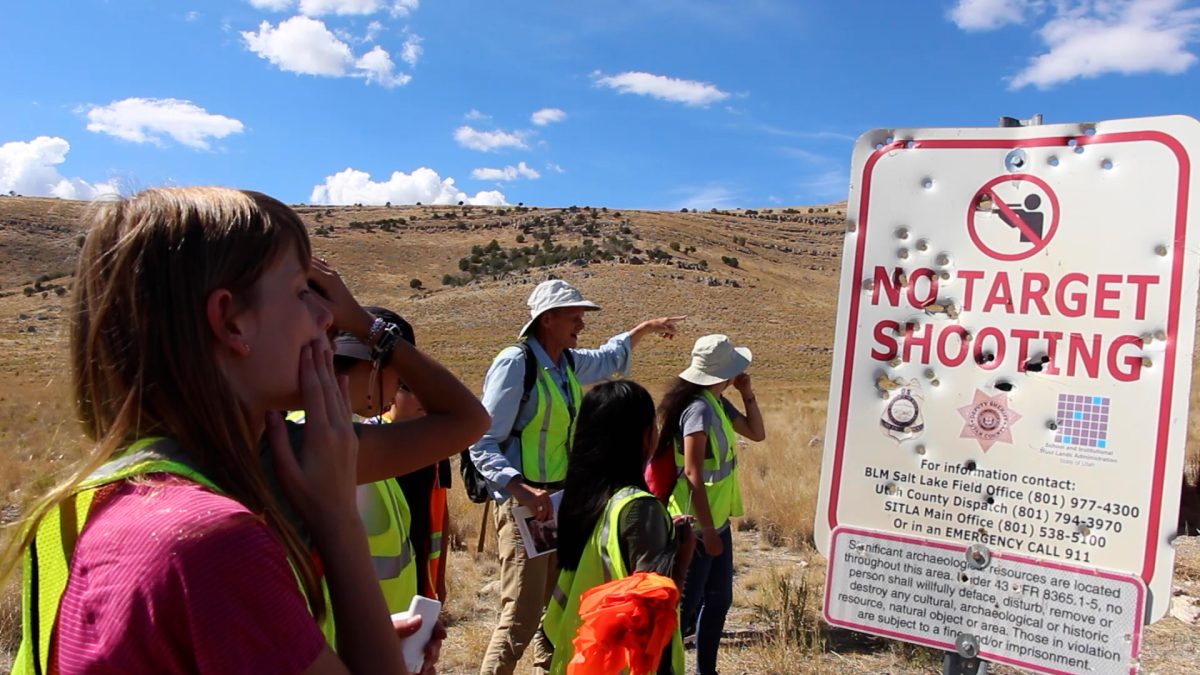
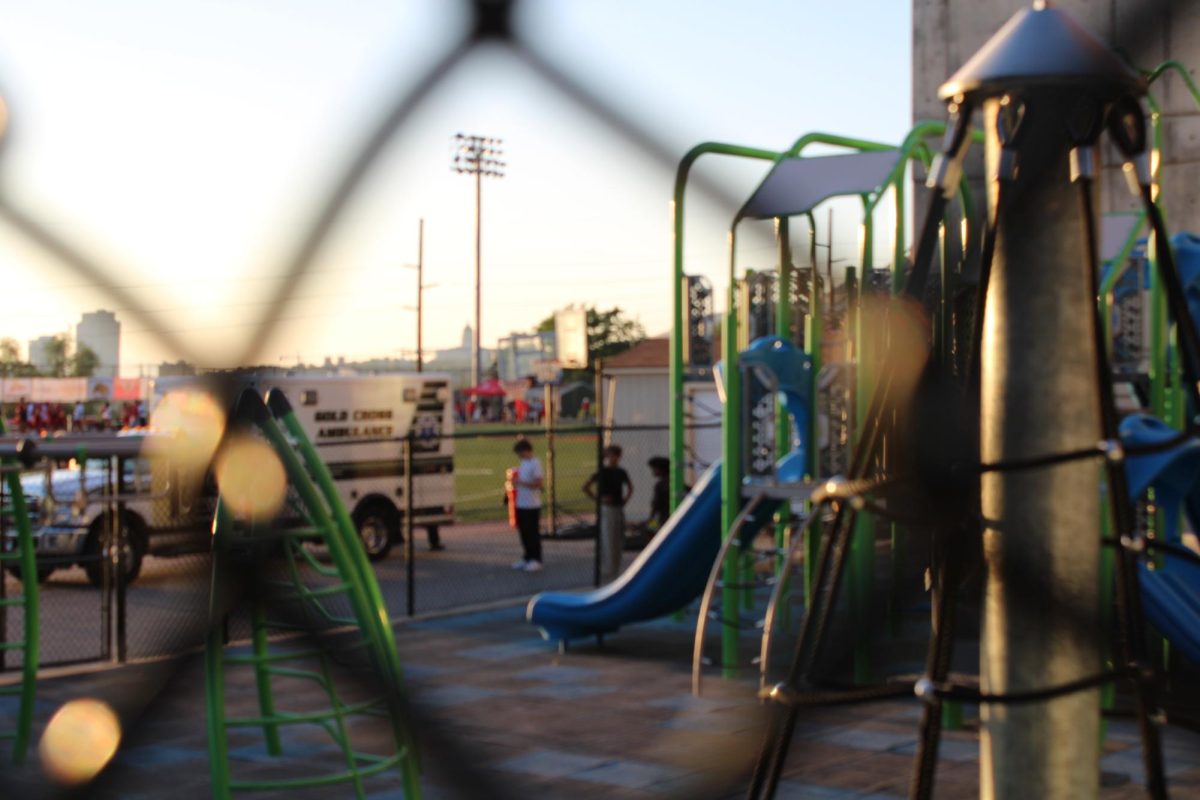
As more Utahns want to enjoy the outdoors, this bill is providing grants to build and restore recreational facilities and sites. As youth become increasingly immersed in the outdoors, this bill offers a promising outlook for the future of recreational activities in and across Utah.
SB45: Kratom Adjustments, Sen. McKell
Kratom, a plant-based supplement, is not illegal to use or sell in Utah. It is now considered under the Utah government in a category of drug comparable to heroin and cocaine. Opponents worry that this would take away a legal option that helps people manage pain or get off harder drugs.
Read Neil’s opinion on SB45 here
SB69: School Device Revisions, Sen. Fillmore
This bill (set to take effect next year) bans all cell phone and other device use during the school day, not just during class time. Those in support of this policy claim that it will continue to help students build connections and relationships at school, while others see this bill as a potential safety hazard by preventing students from being in contact with their guardians or from knowing what is going on.
Read Miles’ opinion on SB69 here
As the legislative session has concluded, the importance of youth involvement in government remains. The more students take time to view the world around them and learn about the local policies taking place, the more democracy is shared throughout our communities.
Look for more stories regarding the bills followed in this session on the Bulldog Press.