






































You might think that in 2026 it would be easy for Lyv Candilora and Faith Deng to find jobs, but it turns out that isn’t the case. It’s not as simple as walking into your local grocer and snagging a job as a cashier anymore.
Youth employment shifted again this summer, and the numbers show a mix of progress and setbacks. . According to the U.S. Bureau of Labor Statistics, “53.1 percent of young people (those ages 16 to 24) were employed” in July 2025, slightly down from 54.5% the year before (BLS, 2025). The youth unemployment rate also rose to 10.8%, up from 9.8% in July 2024.
Every summer, millions of teens and college students enter the job market, and 2025 was pretty similar. Between April and July, the youth labor force “grew by 1.9 million, or 8.9 percent,” as students looked for seasonal or full-time work (BLS, 2025). But even with that increase, fewer young people actually ended up with jobs compared to last summer.
Most teens kept working in the same common industries. Hospitality and Food service stayed the biggest employer, with 25 percent (5.4 million) of working teens in that area, followed by retail at 17% (BLS, 2025). Employment rates dropped for White and Asian youth, while numbers for Black and Hispanic youth stayed mostly the same.
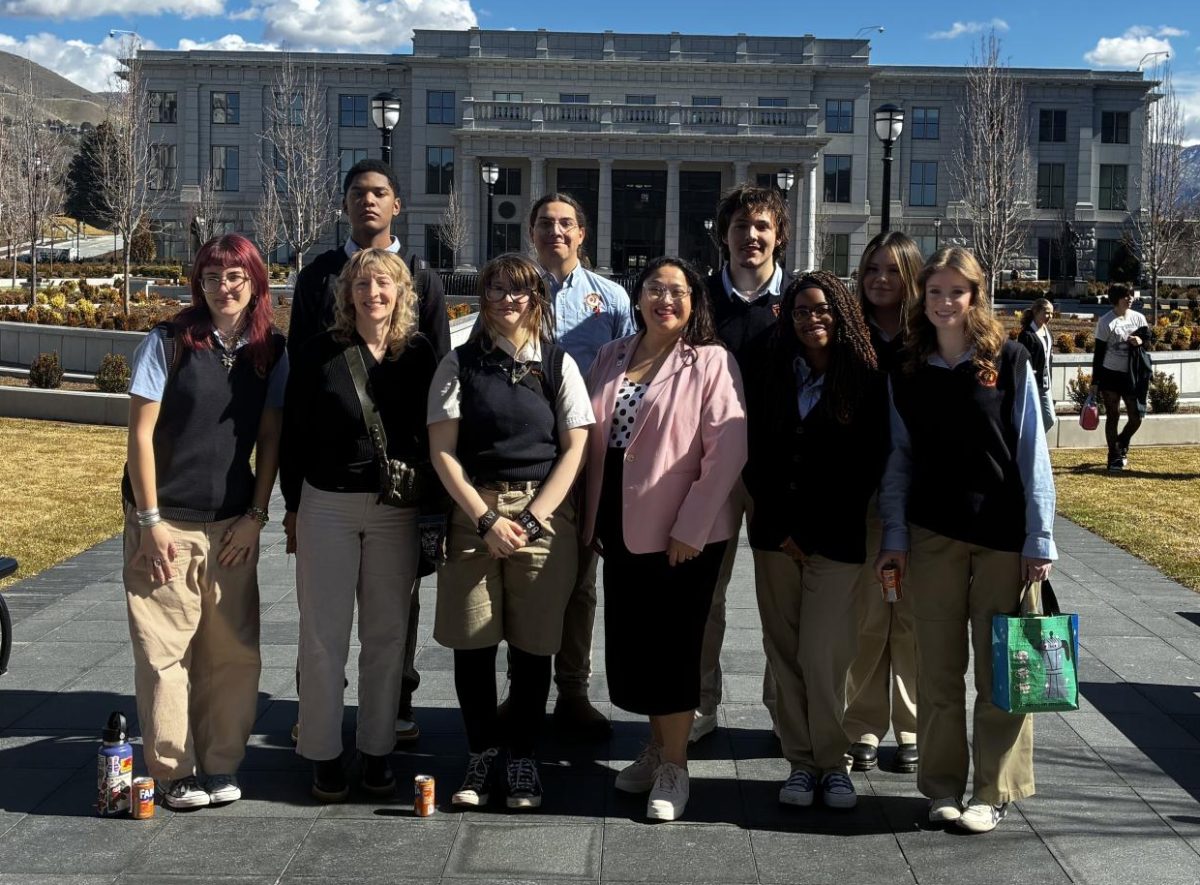
To get a sense of how these trends feel at the student level, I talked to two classmates, Lyv Candilora and Faith Deng, about their views on today’s teen job market. Faith said she thinks it’s getting harder for teens, explaining, “There’s like less jobs to get and slots just keep getting filled up, and they’ll take an older person over a teen.” But Lyv sees it differently: “more families need another source of income… so I think it’s easier because more people are giving [jobs] out.”
Their thoughts match national data on wages. In a lot of cities, teen pay is now about $17 – $19 an hour, which is way higher than in past years. Still, both agreed that minimum-wage jobs don’t really cut it. When reacting to the national $7.25 minimum wage, Lyv said, “Seven dollars? Yeah, I feel like that’s not a fair amount.”
But not all teens have the same access to these jobs. Research from the Urban Institute found that “Black and Latinx youth were employed at much lower rates than white youth,” even with the same education levels or industries. These gaps show how deeper inequalities still shape who gets hired. The report also pointed out risks for “disconnected youth”—those who aren’t in school or working—who often face “lower future earnings, lower educational attainment, and higher rates of criminal justice involvement.”
Long-term studies also show mixed effects of teen work. The Youth Development Study found that the impact of a job really depends on hours, school balance, and stress (Mortimer, YDS). Teens who work too many hours often see their grades drop, but those with manageable schedules gain responsibility, time-management skills, and confidence. Faith mentioned this too, saying that jobs help teens build “life skills and financial independence… just how to manage money.”
Economists warn that young workers are usually the first to feel it when the job market slows down. One expert noted that “people aged 16 to 19… tend to be the first ones to let go” when hiring weakens (Nestler, CNBC).
Still, there are ways to help. Research shows that summer youth employment programs can “increase earnings, reduce criminal justice involvement, decrease mortality, and improve academic outcomes” (Urban Institute). These programs especially help teens who have a harder time finding jobs. Lyv also said schools could help more, explaining, “Some kids come from families where parents don’t really know how to do things like that… it’d be easier if school helped with that.”
Overall, the summer job market (and job market in general) is growing but still uneven. Higher wages and strong demand are bringing more teens into the workforce, but racial and economic gaps and rising unemployment are all still factors. Schools and Communities should take note: teens do best when they have access to steady, reasonable work—and when the systems around them provide support.